
News
Call will support South American scientific cooperation on antimicrobial resistance Versão em português
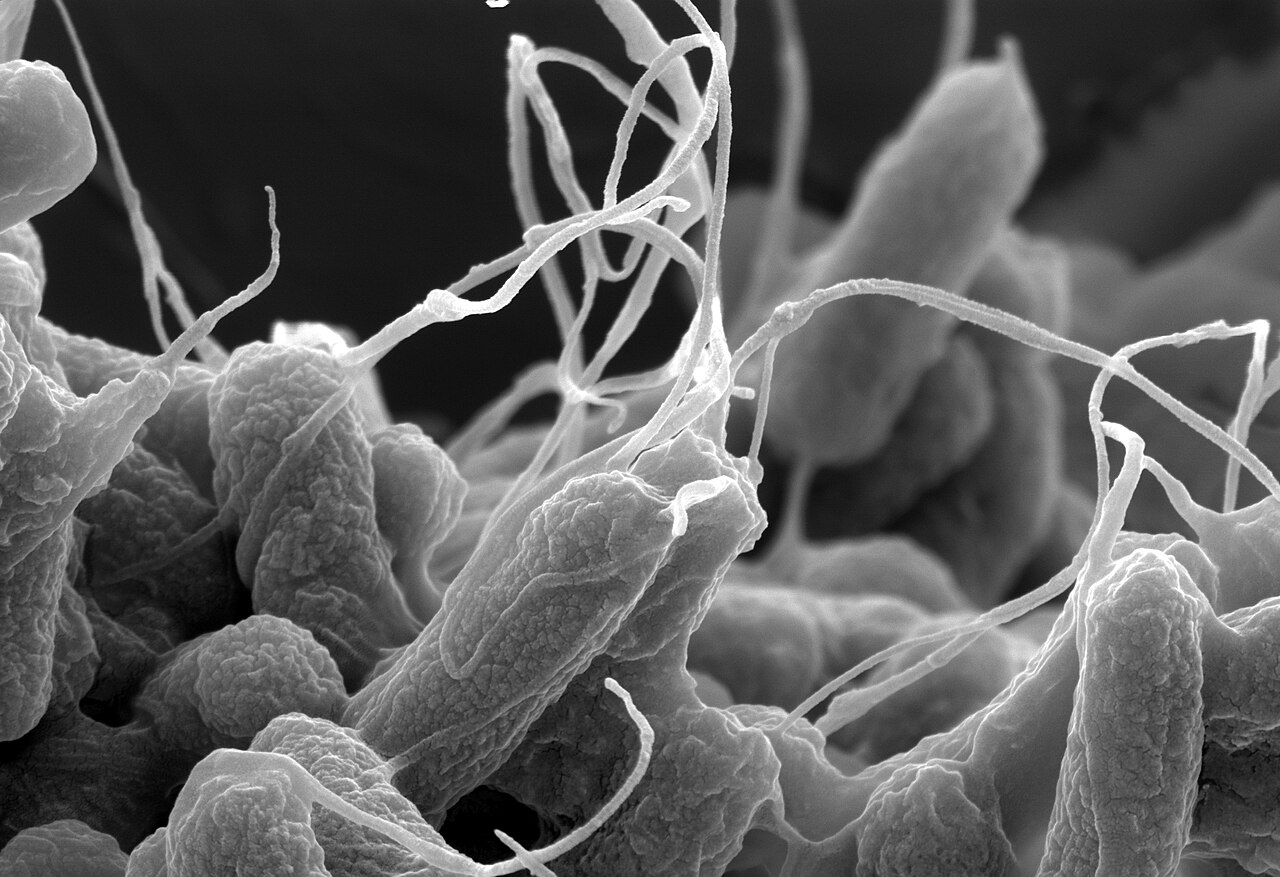 Photo: Nulgur D/Wikimedia Commons
FAPESP will co-finance projects on various aspects of super-resistant microorganisms in intensive animal production with funding agencies from Argentina, Paraguay, Uruguay, and Espírito Santo state.
FAPESP is participating in a call for funding research and knowledge transfer projects on Antimicrobial Resistance (AMR) together with four other funding agencies with which it has a scientific cooperation agreement: the National Scientific and Technical Research Council (CONICET) of Argentina; the National Agency for Research and Innovation (ANII) of Uruguay; the National Council of Science and Technology (CONACYT) of Paraguay; and the Research and Innovation Support Foundation of Espírito Santo (FAPES) – the call is also supported by the International Development Research Centre (IDRC) of Canada.
The call for proposals marks the kickoff of the Regional Program on Antimicrobial Resistance 2026, which aims to reaffirm the commitment made in the Political Declaration of the High-Level Meeting on Antimicrobial Resistance, held at the UN General Assembly in September 2024, with the goal of addressing the multifaceted and cross-cutting nature of antimicrobial resistance and reducing AMR-related fatalities by 10% by 2030.
Applicants should develop research related to AMR in the context of intensive animal production for human consumption in Argentina, Brazil, Paraguay, and Uruguay. Various aspects of AMR in the production chains should be addressed through scientific research, public policy formulation, and the implementation of production adaptations, with the aim of integrating and strengthening regional capacities on the subject; additionally, projects should promote cross-sectoral participation, involving scientists, producers, and regulatory agencies.
The Call defines five thematic axes, one or more of which must be addressed by the proposals, namely: (i) Survey of Antimicrobial Resistance (AMR) in Animal Production; (ii) Survey of AMR in the Environment; (iii) Development of methodologies and mitigation strategies; (iv) Development, promotion, and use of alternatives to antimicrobial growth promoters; and (v) Production challenges in mitigating AMR.
Proposals must be submitted by research groups from institutions located in at least two of the territories covered by the participating agencies. Each research group will be represented by a Principal Investigator (PI), and one of the PIs in the consortium must be designated as the consortium's representative to CONICET, the leading agency of the Call.
Projects will have a maximum duration of 24 months. Each agency will fund the costs corresponding to its own groups or institutions.
Eligibility Stage
All proposals will be analyzed, in a first stage, to verify their eligibility for the Call. Proposals that are not eligible by at least two of the participating agencies will be discarded and will not proceed to analysis by the Call Evaluation Committee – an ad hoc body composed of 5 recognized specialists, one designated by each funding agency, and another appointed by all the agencies by mutual agreement.
At FAPESP, researchers affiliated with a Research or Higher Education Institution based in the state of São Paulo, private or public, who meet the eligibility criteria of the Regular Research Grant modality are considered eligible. Each researcher can participate in a maximum of two proposals, but can only be designated as PI in one of them.
Submission
The deadline for submitting proposals is April 30. The PR of the formed multilateral consortia must submit them using the submission form to CONICET. Additionally, the PR from the state of São Paulo must submit the proposal to FAPESP via SAGe (https://fapesp.br/sage).
It is the responsibility of the Principal Investigator of the proposal submitted to FAPESP to ensure that the other researchers in the consortium, including researchers from other territories, are registered in the SAGe system and confirm their participation in the proposal.
The call is available at https://fapesp.br/18082.